A Whitepaper by O’Neil Digital Solutions: Financial Communication strategies and best practices.
Financial institutions sit at a crossroads. While technology has revolutionized nearly every industry— setting new standards for personalized communication, speed, and engagement—many banks, wealth managers, insurers, and retirement service providers have failed to keep pace.
Consumers now expect the same intuitive, proactive, and human-centered experiences from their financial providers that they get from brands like Amazon or Apple. Yet financial services often lag behind due to legacy systems. They also suffer from fragmented communication channels and a deep-rooted fear of regulatory risk.
This paper explores how financial institutions can overcome these hurdles by leveraging data, AI, and omnichannel communication strategies. These tools can enhance client engagement, simplify operations, and improve financial outcomes for both clients and institutions.
To achieve this, financial firms must see communication not merely as a functional necessity but as a differentiating capability. This helps bridge trust, improves clarity, and drives value across the client journey.
We explore:
- Why traditional communication models are no longer sufficient
- How rising client expectations are reshaping the CX mandate
- The transformative role of AI, machine learning, and behavioral insights
- Real-world examples of improved engagement and financial outcomes
- Strategic frameworks to align communication with compliance, trust, and ROI 1.
The Engagement Gap in Financial Communication
Despite massive advances in digital tools and client-facing technology, most financial institutions continue to fall short. They struggle to deliver meaningful, personalized, and timely client communications. The disconnect between what clients expect and what they actually experience is growing wider. Consequently, the consequences are significant.
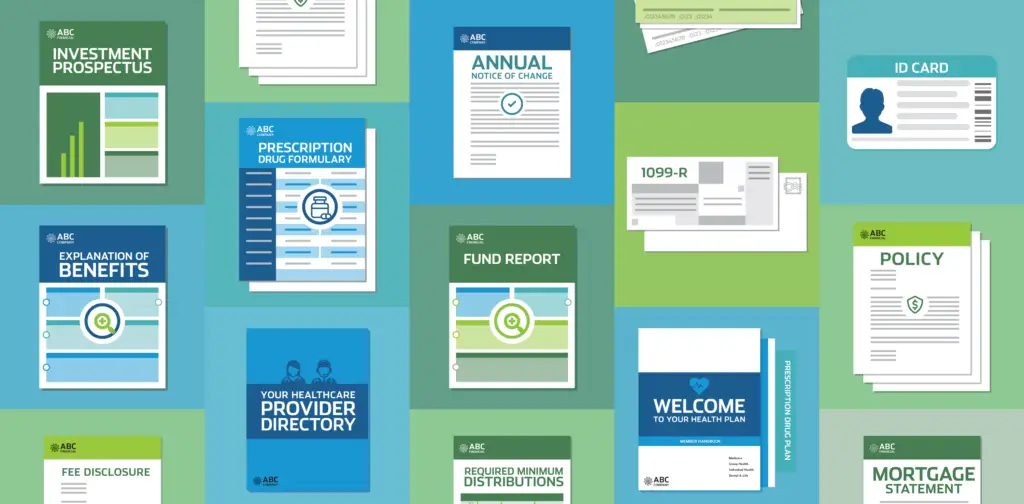
The financial services industry has long been defined by rigid workflows, legacy infrastructure, and siloed systems that hinder cross-channel engagement. While fintech disruptors have led the way in client experience—with seamless onboarding, real-time updates, and hyper-personalized messaging—many traditional banks, credit unions, insurers, and wealth managers still rely on outdated methods. These include generic email blasts, static PDFs, and long call center hold times.
A recent J.D. Power study found that while digital adoption in banking continues to rise, customer satisfaction lags due to poor communication and lack of personalization. In retirement services, participants often receive dense, jargon-filled materials that do little to motivate action. This contributes to low contribution rates, poor engagement, and missed long-term financial goals. Similarly, many insurance policyholders only hear from their providers during renewal periods or when filing a claim. This means key opportunities to build loyalty and cross-sell additional services are missed.
Part of the challenge is structural: siloed departments, legacy systems, and multiple vendors often result in inconsistent experiences across channels. But a larger part is cultural. Many financial institutions still treat communication as a transactional necessity—rather than a strategic asset.
To close the gap, organizations must adopt a new mindset. They need to see communication as an essential lever for growth. This means investing in modern client communication management (CCM) and customer experience (CX) platforms. Additionally, integrating data across the enterprise and activating machine learning to understand client behavior in real-time is crucial. It involves viewing every document, interaction, and message as a chance to strengthen relationships, influence behavior, and deliver value.
Leaders in the space are showing what’s possible. Capital One and Chase, for example, have embraced mobile-first, behaviorally informed nudges that guide users toward healthier financial habits. Vanguard has built an entire behavioral finance practice around using content and digital engagement to increase retirement plan participation. These firms are proving that financial communication, when done well, can be a competitive differentiator—not just a regulatory requirement.
Behavioral Insights Drive Better Financial Outcomes
The next frontier of client engagement in financial services lies in behavioral science. Financial decisions are rarely made rationally; they are emotional, context-dependent, and often driven by cognitive biases. The institutions that recognize this—and use data to respond in empathetic, personalized, and actionable ways—will lead the future.
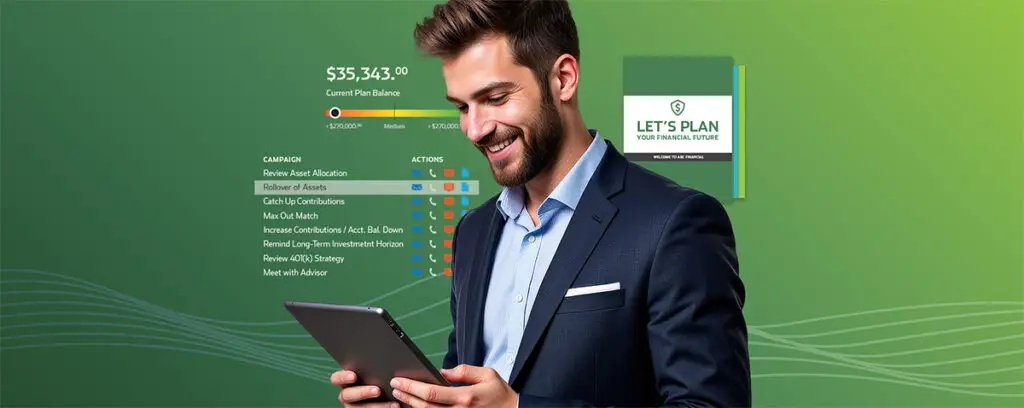
For example, consider the typical 401(k) participant who contributes less than the match threshold. Traditional communication might involve sending them an annual statement or enrollment form, hoping they read and act. But behavioral data reveals that inertia, lack of confidence, and choice overload are more powerful barriers than ignorance. By using AI to detect these signals—and delivering timely, personalized nudges via email, SMS, or interactive video—plan providers can increase contribution rates. This, in turn, improves retirement readiness.
At scale, this behavioral approach can transform outcomes. ONEsuite’s advanced data and predictive modeling capabilities, for instance, make it possible to not only identify a segment of under-engaged retirement plan participants, but also understand their demographic, financial, and behavioral traits. This enables financial institutions to deliver a dynamic experience. For example, they might offer an interactive video explaining the long-term impact of small contribution increases, personalized with that participant’s age, income, and goals.
Behavioral insight also applies to wealth management and insurance. If a high-net-worth client hasn’t opened an emailed portfolio review in six months, it may signal disengagement—or worse, potential attrition. Using machine learning to identify similar patterns and predict risk of churn allows advisors to proactively intervene. They might use a custom outreach plan, such as a call, a tailored report, or a relevant market commentary video…
There’s more where this came from. Complete the form below to access the full whitepaper.